Showing posts with label MKH 416. Show all posts

Wednesday, January 9, 2013

Rode NTG-3 Shotgun Mic


NTG-3 and MKH 416 open for close inspection

A $699 USD street, the Australian-made Rode NTG-3 seems extremely well-placed for its price and performance. Like the Sennheiser 416, the NTG-3 is an RF-condenser that combines a somewhat sophisticated RF circuit with the capsule to reduce the deleterious effects of high humidity. Tricky to design, but worth the effort. That design element has contributed greatly to the 416ʼs “bullet proof” reputation and should do the same for the NTG-3.

FEATURES
The RF environment is growing significantly more hostile, though, and Rode seems to have taken shielding a bit farther than Sennheiser did back in 1974 when the MKH 416 came to market. Attention to the mechanical and electronic lay out of the NTG-3 including the surface mount technology (SMT), PCB layout, component selection and dual chamber design of the internal brass tube that appears to separate most of the circuitry from the tunable RF section and capsule, all contribute to RF resistance and mic performance. Sennheiser has also gone to SMT and other upgrades with all of their later model MKH 416 mics.

Monday, April 23, 2012

Rode NTG-3 Shotgun Mic - Ready For Action


This Australian-made Rode NTG-3 microphone ($699) seems extremely well-placed for its price and performance. Like the Sennheiser 416, the NTG-3 is an RF-condenser unit that combines a somewhat sophisticated RF circuit with the capsule to reduce the deleterious effects of high humidity. It's tricky to design, but worth the effort. That design element has contributed greatly to a "bullet proof" reputation for similar mics and should do the same for the NTG-3. 

Sunday, March 25, 2012

Sanken CS-1 Short Shotgun -- But Is It A Shotgun??


Sanken CS-1e
The Sanken CS-1, and for that matter the Sanken CS-3, were both modified shortly after they came out. The new versions are the CS-1e and CS-3e. It's been some time, but I recall the modification had to do with lowering the noise figure on each mic.

Saturday, March 3, 2012

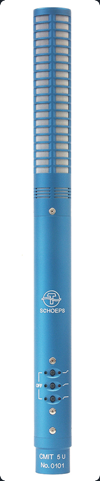
Schoeps CMIT Analog Shotgun Mic


Schoeps CMIT Analog Shotgun
Yes, there is now a Schoeps Digital shotgun mic. But this analog version came first in 2005 after some arm twisting and it's a great sounding mic. I'll post my review of the digital SuperCMIT later.

Imagine the surprise of shotgun mic users everywhere to find that Schoeps finally caved after twenty years and made a shotgun microphone. At the 2005 New York AES Convention, there it was, in blue anodized aluminum. No other mic on the planet looks like it so they get marketing marks for that alone. What took them so long? What are the implications? What are the features? How does it sound? We can only guess what changed their mindset from, “We don’t want/need to.”